
Timber and sheet materials are the quiet backbone of most jobs. They arrive early, get handled by everyone, and if they’re wrong they create problems that show up late, when the finishing trade is already booked and the client is already asking for dates. From a merchant’s point of view, “quality” is rarely about a premium label. It’s about whether the stock behaves predictably once it leaves the yard.
A lot of site frustration comes from assumptions. A stud is a stud, a sheet is a sheet, and if it looks fine on the rack it will be fine on the wall. In reality, small differences in grade, treatment, straightness, and moisture content decide whether work goes smoothly or turns into trimming, packing, squeaks, and call backs.
Most trade building supplies issues start with timing and storage rather than outright defects. Timber that’s fine when it’s loaded can move after a wet weekend. A sheet that sits on edge against a damp wall can swell before it’s even fixed. Understanding what you’re buying and how it’s been stored is often more useful than chasing the cheapest price.
Carcassing timber: grades, treatment, and what you’re really paying for
Carcassing timber is where “good enough” can get expensive. Merchants typically supply graded structural softwood, commonly stamped to show strength class. In practical terms, the grade relates to allowable defects and structural performance, but what trades feel day to day is consistency: how often you have to reject pieces for twist, bow, or excessive knots right where you need fixings.
Treated vs untreated is not just about being outdoors. Treated timber is pressure impregnated with preservative to resist rot and insect attack, and it’s often specified where timber sits in riskier conditions: external framing, ground contact, or situations where moisture is likely. Untreated timber can be appropriate for dry internal use, but only if it stays dry. The catch is that many “internal” areas are not actually dry during construction. New builds can be wet for months. Extensions often have long periods where openings are temporary. If you are building in damp conditions, treatment becomes a practical choice, not a theoretical one.
Straightness matters more than people admit because it drives speed and finish. A bowed stud forces you to pull walls into line, which creates stress, squeaks, and plaster cracks later. Twisted joists telegraph into floors, making levelling harder and increasing the risk of movement. The time lost fighting timber is usually bigger than any saving on the order.
Moisture content is the other hidden factor. Timber is hygroscopic: it takes on and gives off moisture depending on conditions. If you fit timber that’s too wet, it will shrink as it dries, which can loosen fixings, open joints, and contribute to squeaks. If you fit timber that’s very dry and then it takes on moisture, it can swell and push against boards and sheets, again creating movement. On site, you don’t need lab numbers to see risk. Heavy, cold-feeling timber that looks “fresh” and has wide variation in colour across the pack often behaves differently from timber that looks settled and consistent.
How merchants store timber, and why it matters
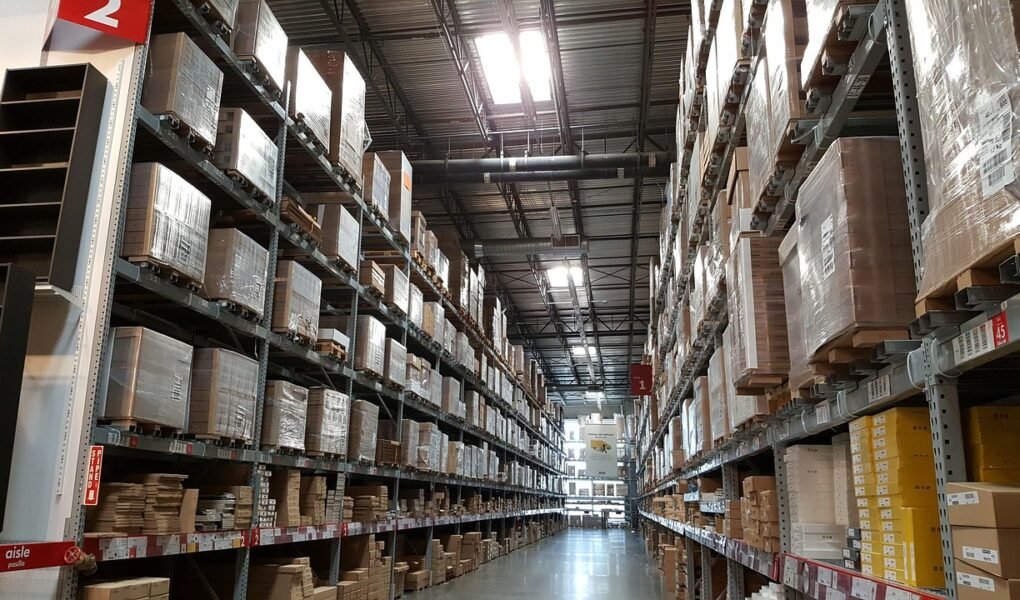
Storage is a large part of timber quality control. Merchants aim to keep packs off the ground, supported properly, and protected from direct weathering. The goal is not to keep timber bone dry, but to stop uneven wetting and uneven airflow, which is what drives twist and bow. Packs that sit half covered or sit on uneven bearers are more likely to move. In busy yards, stock turns fast, and the best indicator of predictable timber is often how uniformly the pack has been stored and strapped.
Handling and delivery can undo good storage. Fork tines through banding, packs dropped out of level, and loose straps during transport all allow movement. Once a pack shifts, pieces rub, edges get knocked, and boards can spring. On site, leaving timber laid flat on uneven ground, or propped against a wall where one edge stays damp, encourages distortion.
Inspecting packs quickly at the counter
You rarely have time to go through every length, but you can spot trouble fast. Look along the edge of the pack for pieces that are already bowed. Check the ends for splitting and heavy knot clusters. If the pack is strapped, note whether it’s tight and square or bulging, which can indicate shifting. If you need straight stock for studs, door linings, or visible work, say so at order stage. A merchant can often pick from a fresher pack, or at least avoid the one that has been opened and picked over.
If you’re collecting, take ten seconds to sight down a couple of lengths, especially the ones you’ll rely on for setting out. It’s quicker to swap a few pieces at the yard than to fight them for hours.
Sheet materials: OSB vs plywood vs MDF, and where each actually belongs
Sheet choice is often treated as a preference, but it should be about environment and performance.
OSB is a workhorse for structural sheathing, decking, and roofing in many systems. It’s strong, consistent, and cost effective, but it is not a fan of persistent wetting. Short exposures happen on real jobs, but repeated wetting and drying cycles can raise edges and increase thickness at the joins. That’s where you start to see uneven floors and squeaks if joints aren’t supported and fixed correctly.
Plywood is usually chosen where you want better edge holding, a cleaner face, or a tougher sheet. Quality varies widely, and the glue and veneer quality matter. Poorer sheets can delaminate when moisture gets in, especially at exposed edges. If you’re using plywood in areas with any moisture risk, edge sealing and correct grade selection are not optional. Plywood is also more forgiving for fixings than some alternatives, which is why it’s still a go-to for certain floors and high-wear uses.
MDF belongs in dry, controlled internal conditions. It’s stable and clean for cutting and finishing, which makes it useful for trims, built-ins, and painted work. But it swells dramatically when it gets wet, and that swelling is rarely reversible. Even high moisture resistant MDF has limits. If there’s a chance of damp during construction, it needs protecting and it needs to be stored correctly.
Swelling, delamination, and squeaks usually come down to a few causes. Sheets stored on edge or on uneven supports can warp. Edges exposed to water soak it up first. Gaps and expansion allowances ignored at installation can force sheets to push against each other as conditions change. Squeaks often come from movement between sheet and joist, caused by uneven joists, insufficient fixings, fixings that miss the joist, or adhesive that wasn’t applied consistently. Movement gets louder once finishes go down, which is why sheet choice and installation discipline matter early.
Delivery, handling, and site storage affect the result
Merchants can supply good stock and you can still end up with poor outcomes if handling is rough. Sheets damaged at corners or edges create weak points for moisture ingress. Packs left open in the rain, or timber left unstrapped with uneven exposure, will move. The simplest improvements are often boring ones: keep packs wrapped until needed, re-cover opened packs, store sheets flat on level bearers, and keep edges away from standing water.
A simple checklist when ordering and collecting
Order stage
Specify the use: structural framing, internal studs, flooring, roofing, or joinery
Ask for graded carcassing where structural performance matters
Choose treated timber where moisture risk is realistic during the build
Order the right sheet for the environment: OSB or plywood for structural, MDF for dry internal finishing
Add enough straight lengths for critical setting out rather than hoping the pack is perfect
Collection or delivery check
Look for square, tightly strapped packs and intact wrapping
Sight down a few key lengths for twist and bow
Check ends for splits and excessive knot clusters
Inspect sheet edges and corners for knocks and swelling
Confirm sheet thickness and type match what was ordered
On site handling
Store timber off the ground, supported evenly, and re-covered when opened
Store sheets flat on level bearers, keep them dry, and protect edges
Handle packs carefully so straps and corners stay intact
If trades treat timber and sheet materials as “set and forget” items, they often pay later in time and finish quality. Treat them as performance materials, not commodities, and the job tends to run quieter, straighter, and with fewer surprises.