
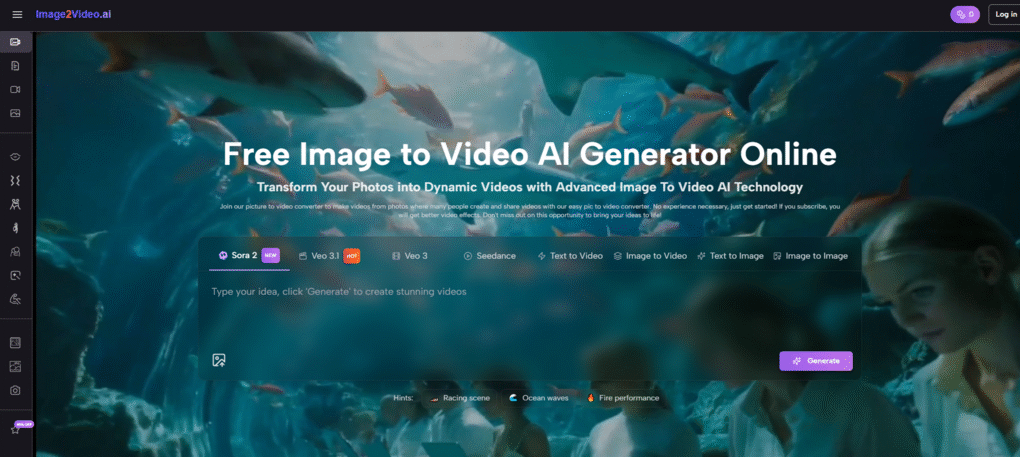
History is often captured in static moments—faded photographs of ancestors, old wedding pictures, and childhood snapshots that remain frozen in time. While these images are precious, they are inherently silent and still. Image to Video AI provides a way to re-contextualize these memories, turning a flat piece of paper into a living, breathing window into the past. For many families, the problem is a sense of disconnection from their history; the people in the photos feel more like characters than relatives. This emotional distance can be agitated by the loss of detail in old prints. By using AI to animate these photos, we can bridge that gap, allowing a new generation to see their heritage in a dynamic format that feels more immediate and real.
In my testing with archival-style photos, the most striking aspect is the AI’s ability to “guess” what lies behind the static pixels. When you ask the system to animate an old portrait, it doesn’t just move the image; it interprets the shadows and textures to simulate depth. I have seen results where a slight tilt of the head or a subtle blink can completely change the emotional weight of a photo. It is important to note, however, that the AI’s interpretation is a creative one, not a factual one. The movement it generates is a “hallucination” based on its training, meaning it represents a potential reality rather than a recorded one. This distinction is vital for those using the tool for historical or genealogical purposes.
Advanced Semantic Interpretations In Historical Photo Animation
The technology behind this emotional storytelling relies on models like Veo 3 and Seedance 2.0, which have a deep understanding of human expression. When the platform’s “Animate Old Photos” tool is used, the AI specifically looks for features it can bring to life without distorting the underlying identity of the person. In my observation, the stability of these animations has improved remarkably. Early versions often resulted in blurred features, but the current integration handles the grain and noise of old film with surprising grace. The result is a five-second MP4 that feels like a rediscovered piece of family film rather than a modern digital creation.
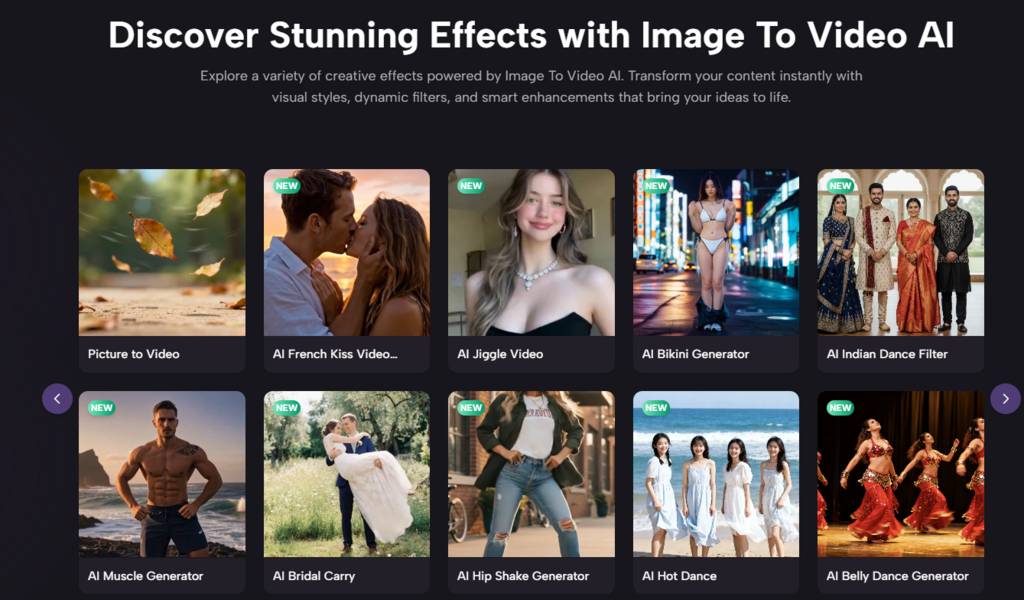
One of the more profound applications is the ability to create interactions that never happened in real life. Features like AI Hug can be used to simulate a moment between two people in a photo, providing a sense of closure or connection. While some may find this controversial, for many, it is a form of digital healing. The technology is also being used by museums and educators to make history more engaging for students. Seeing a historical figure breathe or look around their environment makes the past feel less like a textbook and more like a lived experience. However, users should be aware that the process is currently limited to 5 seconds and may require multiple attempts to get the facial expressions exactly right.
Navigating The Ethical Landscape Of Synthetic Memory Creation
As we move toward a world where Photo to Video technology is commonplace, we must consider the ethical implications of “reviving” the past. There is a fine line between preservation and fabrication. When we animate a photo of a person who is no longer with us, we are creating a synthetic version of their likeness. In my experience, the best results are achieved when the movement is subtle and respectful to the original composition. Over-animating can lead to a loss of the photo’s original soul. It is always recommended to keep the original static photo alongside the animated version to maintain a link to the authentic historical record.
Furthermore, the lack of native audio integration in the current platform means that these “memories” are silent. While some might see this as a limitation, I believe it adds to the dream-like, ethereal quality of the animations. It allows the viewer to project their own feelings and memories onto the movement. For those who want a more complete experience, adding a soft background track using external software can transform the 5-second clip into a powerful “picture video with music” that can be shared during family gatherings or anniversaries.

Step By Step Guide To Transforming Legacy Media Into Motion
The process of breathing life into historical or personal photos is designed to be straightforward, allowing anyone to preserve their memories without needing professional editing skills.
- Digital Restoration And Upload
Scan your physical photo at a high resolution and upload the JPEG or PNG file to the converter. If the photo is very damaged, it may be helpful to use a basic photo repair tool first, as the AI performs best when the eyes and facial features are clearly visible.
- Contextual Motion Description
In the prompt field, describe the desired action. For old photos, “gentle smile” or “looking at the camera” often works better than high-energy movements. This helps maintain the dignified feel of a historical portrait while adding a touch of life.
- Intelligent Rendering Period
The AI takes approximately five minutes to process the request. It analyzes the static pixels and generates the necessary frames to create a fluid, five-second motion sequence that respects the original lighting and texture of the photo.
- Preservation And Export
Once the “Status Completed” appears, review your video. The final MP4 can be saved to your device and shared with family members, or used as part of a larger digital legacy project or memorial video.
Comparison Of Historical Preservation Methods
| Method | Physical Album Storage | Standard Digital Scan | AI Motion Animation |
| Durability | High (with care) | Very High (cloud) | Very High (MP4) |
| Engagement | Low / Tactile | Medium / Visual | High / Emotional |
| Visual Format | Still Paper | Still Digital | 5-Second Motion |
| Accessibility | Physical Location | Global Access | Global Access |
| Production Cost | Minimal | Low | Low (Automated) |
The Future Of Personalized Digital Archives
The growth of the Photo to Video sector suggests that our relationship with personal media is becoming more interactive. In the coming years, we may see the ability to “talk” to our old photos or explore a 3D environment generated from a single 2D snapshot. The current 5-second generation is just the first step toward a more immersive way of experiencing our history. As AI models become more sophisticated, they will be able to handle longer sequences and more complex emotional cues, making the bridge between the past and the present even stronger.
For now, the technology serves as a powerful tool for connection. It allows us to see the world through the eyes of those who came before us, even if only for a few seconds. By turning our static archives into moving stories, we ensure that our personal and collective histories remain vibrant and relevant in a rapidly changing digital world. This blend of cutting-edge AI and human sentiment is where the true potential of generative video lies—not just in making “content,” but in making meaning.