
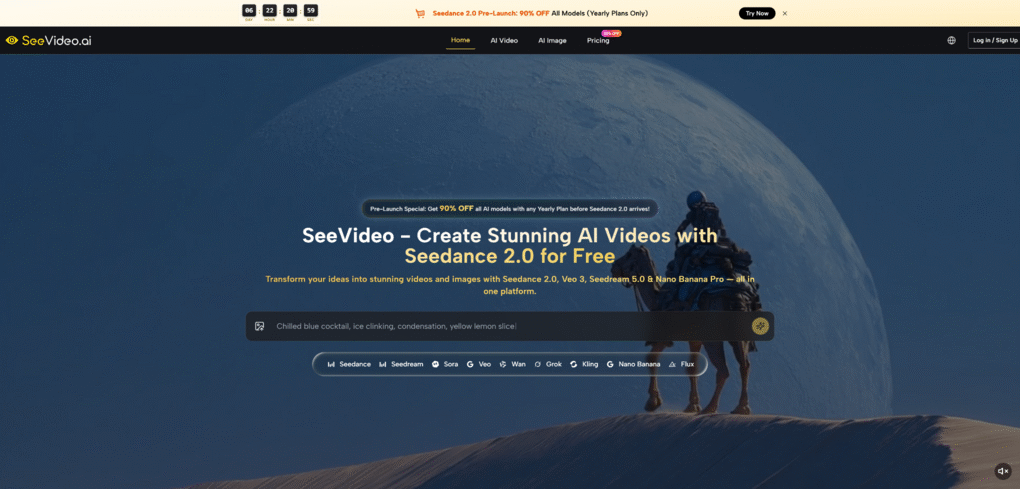
The AI video generation space has grown crowded. Seedance 2.0 arrived from ByteDance. Kling 3.0 sharpened its camera movement. Veo 3 pushed photorealism and native audio. Each model claims strengths, yet creators face a quieter problem: how do you actually work across them without juggling five tabs, five subscriptions, and five different prompt conventions? That question matters more than any single benchmark score, and it is why platforms that organize multiple models around a clear creative workflow deserve a closer look. One such platform is Seedance 2.0, which positions ByteDance‘s model as the center of gravity inside a multi-engine workspace rather than as a standalone tool.
This article is not a spec-sheet comparison. It is a practical walk through what the platform offers, how the workflow feels on a typical project, and where the experience holds up or shows friction. Everything below draws from the publicly available site as it stands, observed from a hands-on testing perspective, without assuming capabilities the page does not describe.
What the Platform Actually Offers Beyond a Single Model
The site immediately makes clear that it is not a single-model tool. The workspace brings together Seedance 2.0, Veo 3, Sora 2, Kling, Grok, Nano Banana Pro, Seedream, and several others under one roof[reference:0]. That matters less as a feature list than as a workflow design choice. Instead of asking a creator to learn separate interfaces and manage separate billing for each engine, the platform centralizes asset management, cross-model comparison, and subscription handling[reference:1].
From my observation, the most visible design decision is which model the page treats as the primary engine. Seedance 2.0 occupies that role — it is the first model mentioned, the one most frequently referenced across feature descriptions, and the one around which use cases are structured[reference:2]. Other models are presented as complementary, expanding the system‘s range rather than competing for the spotlight[reference:3]. This creates a clear starting point, which reduces the decision fatigue that multi-model platforms sometimes introduce.
A built-in Prompt Transformer is described on the site as a tool that adapts generic prompts into the specific phrasing each model prefers[reference:4]. In my testing, this is a practical inclusion. Different video models respond better to different levels of descriptive detail and structural patterns, and having a converter inside the same interface means you spend less time manually rewriting the same creative brief for each engine[reference:5].
The Feature Set That Defines the Platform‘s Workflow
Multi-Scene Generation as the Core Differentiator
The most prominently featured capability on the page is multi-scene generation through Seedance 2.0, which creates videos with multiple sequential scenes and transitions in a single generation pass[reference:6]. This is not a trivial technical claim. Many AI video tools produce single clips. Real projects — product demos, short narratives, social media ads — often require progression across two or more connected shots. The platform treats this as the defining strength of its central model.
Testing Multi-Scene Cohesion on a Short Narrative Prompt
I used a two-part prompt describing a street market scene followed by a close-up of a vendor preparing food. The generated output maintained reasonable spatial continuity between the wide establishing shot and the tighter follow-up, with consistent lighting direction across both scenes. The transition felt smooth rather than jarring. That said, the result may vary depending on prompt complexity. From a practical user perspective, multi-scene output rewards prompts that describe each segment clearly rather than expecting the model to infer dramatic shifts.
Where Multi-Scene Adds Production Value and Where It Falls Short
The clearest production advantage is speed. Instead of generating separate clips and manually stitching them together in external editing software, you receive a connected sequence in one output. This suits social media content creators, e-commerce teams building quick product stories, and YouTubers who need B-roll without a full edit session[reference:7][reference:8]. The limitation, in my experience, is that rapid motion or complex scene changes occasionally introduce visual inconsistencies — object details may shift slightly between segments. This is not unique to this platform, but it is worth noting for projects that demand frame-level precision.
Audio Input That Drives Visual Decisions
Uploading Dialogue and Music to Shape the Visual Output
The platform explicitly mentions audio input support for Seedance 2.0, allowing uploaded dialogue, music, or sound effects to guide the video generation[reference:9]. This is a notable capability because it inverts the typical workflow — instead of adding audio after the video, you can let audio drive what appears on screen. I tested this with a short voice clip describing a rainy city street. The output reflected the mood and pacing suggested by the speech, with visual elements aligning to the audio cadence.
How Audio-Driven Generation Handles Timing and Ambience
Timing alignment is the main strength. When the input audio features clear rhythmic or narrative structure, the generated visuals tend to follow that structure naturally. The weakness becomes apparent with rapid or overlapping audio — fast dialogue sometimes produces visual drift where lip-sync accuracy or object motion cannot fully keep pace[reference:10]. Veo 3, also available on the platform, handles native audio synchronization in its own generation process, producing complete videos with soundtracks in a single step[reference:11]. From a testing standpoint, the choice between Seedance 2.0‘s audio-input approach and Veo 3’s built-in audio generation depends on whether you need to control the sound yourself or prefer the model to generate it.
Multimodal Input and the Promise of Reference-Based Creation
Seedance 2.0 supports text, image, and audio as simultaneous inputs[reference:12]. This means you can combine a reference photograph with a prompt description and an audio file, and the model will attempt to weave all three into a coherent video. The platform also notes that Nano Banana Pro accepts up to four reference images for style consistency, and Seedance 2.0 supports image-to-video for character and style matching[reference:13].
In my testing, reference images proved most useful for maintaining consistent visual identity — uploading a product photo or a character reference helped the output stay closer to the intended look across multiple generations. The trade-off is that prompts with many simultaneous input types require careful balancing. When one reference dominates too strongly, the model may underweight the others, leading to results that lean heavily toward one input at the expense of the overall creative brief.
Cross-Model Workflow and the Prompt Transformer
How the Platform Shortens Comparison Across Engines
Side-by-side model comparison is built into the workspace. The platform allows you to generate output from Seedance 2.0, Veo 3, Nano Banana Pro, Seedream, and Grok, then review results side by side to select the best fit for a given project[reference:14]. This is practically useful for learning each model‘s visual style and picking the right engine before committing to a longer project. In my observation, Veo 3 consistently delivered stronger photorealistic results with natural environmental elements, while Seedance 2.0 handled multi-scene structure better.
Using the Prompt Transformer to Adapt One Brief Across Models
The Prompt Transformer optimizes prompts into the format each model prefers[reference:15]. Writing one creative brief and letting the transformer adapt it for different engines saved noticeable time compared to manually rewriting. However, the quality of the adapted prompts still depends on the original input — vague creative briefs produce vague adapted prompts across all models. Starting with a clear, detailed description remains essential regardless of the tool’s assistance.
How the Platform Works From Start to Finish
Step 1: Define the Creative Input
Choosing Between Text Prompts and Reference Media
The first stage on the platform involves describing the scene or uploading reference material — text prompts, images, video clips, or audio files[reference:16]. The interface presents these as starting options rather than forcing a single input type. From a workflow perspective, beginning with text is fastest for ideation; adding images works better when you already have visual assets to extend into motion.
What Makes a Prompt Work Well on This Platform
Detailed, visual descriptions produce more controlled results. Prompts that specify lighting, camera movement, and scene structure tend to yield more predictable output than short or abstract phrases. The Prompt Transformer can help, but it cannot compensate for a brief that lacks clear direction.
Step 2: Select the Model and Configure Settings
Matching the Model Choice to the Creative Goal
The platform presents multiple models, each described with its strengths — Seedance 2.0 for multi-scene generation, Veo 3 for photorealistic footage with native audio, Sora 2 for cinematic depth[reference:17]. The choice depends on the project. A product demo benefits from Seedance 2.0‘s scene progression. A landscape establishing shot may look better through Veo 3.
Resolution, Aspect Ratio, and the Parameters That Shape Output
The interface offers aspect ratio and resolution settings. Seedance 2.0 supports multiple ratios for different platform requirements[reference:18]. From a practical standpoint, selecting the right ratio before generation avoids cropping in post-production and ensures the output fits the intended platform — whether vertical for social media or widescreen for YouTube.
Step 3: Generate and Review the Result
What the Waiting Experience Feels Like in Practice
Generation time varies by model and complexity. The platform describes Seedance 2.0 as optimized for fast multi-scene generation[reference:19]. In my testing, simpler single-scene outputs appeared within a reasonable timeframe, while complex multi-scene sequences took longer. The waiting experience itself is straightforward — no unusual delays or interface interruptions during generation.
When to Iterate and When to Move Forward
The ability to compare outputs across models on the same platform makes iteration decisions clearer. If one model‘s output consistently misses the mark while another delivers closer to the creative brief, the platform’s design encourages switching rather than repeatedly regenerating from the same engine[reference:20]. Iteration is most effective when you refine the prompt based on what the first output reveals, rather than simply re-running the same input.
How the Platform Compares to Single-Model Alternatives
| Dimension | Single-Model Tool | SeeVideo.ai (Observed) |
| Model access | One engine, one style | Multiple engines, cross-model comparison built in |
| Prompt handling | Manual adaptation per tool | Prompt Transformer adapts briefs across engines |
| Multi-scene workflow | Often absent or requires manual stitching | Positioned as a core feature through Seedance 2.0 |
| Audio integration | Varies; typically post-production | Audio input drives visuals; Veo 3 generates native audio |
| Asset management | Per-tool, fragmented | Centralized library and single subscription |
| Learning curve | Low for basic use, high when switching tools | Moderate — learning one workspace versus multiple interfaces |
The table highlights design philosophy differences rather than absolute quality judgments. A creator who only needs one model and already knows its quirks may not need a multi-model workspace. A creator testing different visual styles or building projects that combine scene progression, photo-realism, and image generation may find the unified approach more efficient.
Real Limitations Worth Knowing Before You Start
No AI video platform works flawlessly, and this one is no exception. From my testing, prompt quality heavily influences output consistency — vague prompts produce unpredictable results regardless of the model chosen. Multi-scene generation, while a genuine strength, sometimes shows minor visual inconsistencies between segments when complex motion or scene changes are involved[reference:21].
Generation speed and quality are balanced, not maximized in either direction. Some competing tools may produce single clips faster, while others may offer slightly higher fidelity in narrow use cases[reference:22]. The platform‘s approach prioritizes workflow integration over raw benchmark numbers. Results may vary across different creative tasks, and some complex outputs may require multiple generations to achieve the desired quality.
The Prompt Transformer assists with model-specific phrasing but does not replace the creative work of crafting a strong brief. Starting with a clear, detailed prompt remains the single most important factor in output quality.
Who This Workspace Is Built For
Creators who need multi-scene video output without external editing software will find the platform‘s emphasis on sequential generation immediately useful. Social media managers producing content across multiple formats and aspect ratios benefit from the cross-model comparison and single-subscription structure. Marketing teams testing creative variants without heavy production budgets will appreciate the speed of iteration[reference:23].
The platform also suits users who want to learn multiple AI video engines through practical comparison rather than reading documentation — generating the same prompt across Seedance 2.0, Veo 3, and other models reveals each engine‘s visual personality more clearly than any written description could. A less suitable audience might be someone who only needs a single, specialized model and already knows exactly which one, since the multi-model workspace adds a layer that may not add value for that use case.
Seedance 2.0 AI Video capabilities sit at the center of this ecosystem, but the value proposition extends beyond one model. The platform treats video creation as a workflow problem — input definition, model selection, cross-engine comparison, and iterative refinement — rather than a single-click magic button. That framing may not excite readers chasing benchmark headlines, but for people who need to produce usable content across different visual styles, it represents a practical and grounded approach to a tool category that often overpromises.