For many new drivers, the biggest test of skill isn’t a crowded Seattle street; it’s a two-lane country road. Rural driving in WA presents a unique and often underestimated set of dangers.
It’s a common mistake to think “no traffic” means “no risk.” In reality, statistics show the opposite. While only about 20% of Washington’s population is rural, national data consistently shows the fatality rate on rural roads is over 1.5 times higher than in urban areas.
The dangers are different, but they are more severe. In the city, you manage predictable hazards like pedestrians and buses. In the country, you manage high-speed, unpredictable hazards like blind corners, wildlife crossings, and sudden changes in the road surface.
How Rural Roads Differ from Urban Driving
Urban driving is a high-volume, low-speed test of focus. Rural driving is a high-speed, low-volume test of anticipation.
The primary challenges of rural roads include:
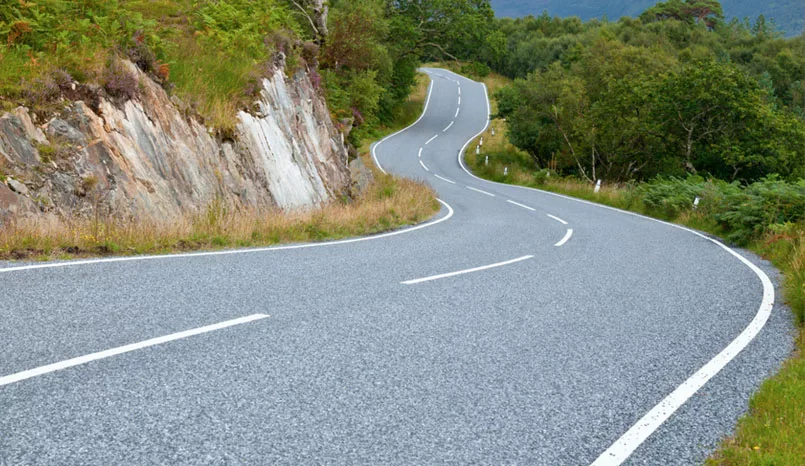
- Poor Visibility: Sharp curves, rolling hills, and overgrown vegetation create “blind” spots.
- Narrow Roads & Shoulders: There is very little room for error. Shoulders may be soft, gravel-covered, or non-existent (narrow road safety).
- Unpredictable Surfaces: You can go from smooth pavement to patch-jobs, potholes, or loose gravel road tips with no warning.
- Unexpected Obstacles: You must be prepared for slow-moving tractors, logging trucks, animals, or even fallen tree branches.
Safety Tips for Curves, Hills, and Gravel Surfaces
On a rural road, speed is your biggest enemy. The posted limit is the maximum for perfect conditions, not a target.
- Curves and Hills: Slow down before you enter a blind curve or approach the crest of a hill. You must be able to stop in the distance you can see. Stay to the right of your lane to maximize the buffer between you and any oncoming traffic. If you can’t see the exit of a curve, prepare as if it will be a tightening radius corner.
- Prepare for the Unseen: You might not be able to see every hazard, but drive with the expectation that the unseen hazard will materialize, whether it is an animal or a car pulling out of a blind driveway.
- Gravel Roads: Treat gravel like ice. Your traction, braking, and steering are all severely reduced.
- The Safe Speed: The safe speed on gravel is the speed at which you are 100% in control. For most new drivers, this is 20-30 mph, regardless of the posted limit.
- Braking: Braking takes much longer. Increase your following distance dramatically and brake gently and early.
- Slow-Moving Vehicles: You will approach a tractor or farm vehicle much faster than you think. Don’t tailgate. This is a perfect time to use the 4-second following distance we teach at WMST. It gives you a safe buffer and more time to see a clear, legal passing zone.
What to Do If an Animal Crosses the Road
This is one of the most frightening aspects of rural driving in WA. Your instinct will be wrong. You must train the correct response.
- RULE #1: DO NOT SWERVE.
- Brake firmly, but stay in your lane. Swerving to avoid a deer often causes a much worse, and often fatal, accident—either a head-on collision with another car or hitting a tree. It is safer to hit the animal than to swerve. If possible, come off the brakes immediately before impact with a large animal to reduce the chance of the animal being deflected into your windshield.
- Be Most Alert at Dawn and Dusk: These are the peak times for wildlife crossings, especially in the fall during mating season.
- Where There’s One, There’s More: If one deer crosses, slow down and assume a second or third is right behind it.
WMST’s Rural Route Practice Sessions
While the official WA Skills Test is not conducted on high-speed rural highways, WMST driver training is designed to give you the fundamental skills to handle them.
Our philosophy of providing six full hours of actual behind-the-wheel instruction (not simulations) is critical. You cannot learn the feel of a car on a loose gravel shoulder or a wet, leafy corner from a computer. Our instructors teach you the advanced hazard perception and vehicle control you need. Our WMST rural driving practice focuses on:
- The 4-Second Rule: This is your best defense against the unexpected, giving you time to react to a deer, tractor, or pothole.
- Traction Awareness: We teach you how to feel the car’s grip and make smooth, deliberate steering and braking inputs, which is the key to managing low-traction surfaces like gravel.
- Advanced Scanning: We train you to look “through” curves and over hills, spotting potential hazards long before they become emergencies and planning for things that you cannot see.
Frequently Asked Questions (FAQs)
Are rural roads part of the driving test?
No. The WA State Skills Test is conducted on marked urban and residential streets to test specific maneuvers (like backing and parallel parking) and your ability to handle common traffic, intersections, and lane changes. It does not include high-speed rural or freeway driving.
What’s the safest speed on gravel?
The safest speed is the one that allows you to maintain full control and stop safely. For most drivers, this is between 20-30 mph, even if a higher limit is posted.
What should I do if a deer crosses suddenly?
DO NOT SWERVE. Grip the wheel firmly, brake hard, and stay in your lane. Swerving is almost always more dangerous and can lead to a more severe collision.
Are headlights always needed at dusk?
Washington law requires your headlights to be on from 30 minutes after sunset to 30 minutes before sunrise. They are also required any time visibility is 1,000 feet or less (due to rain, fog, etc.). The safest WMST-recommended habit is: If it’s dusk, or if your wipers are on, your headlights should be on. If you are in a rural setting, keep your lights on!
Does WMST include rural driving training?
Our state-approved driver education program focuses on the core skills you need to be a safe driver in all environments. While we don’t take beginners on long rural routes, our six hours of in-car training are essential for building the skills you need for them, such as advanced hazard perception, traction control, and mastering the 4-second following distance.