Moisture is the silent saboteur of buildings. It seeps in, condenses, and quietly erodes structural components long before the damage becomes obvious. In large facilities, the stakes are even higher: wet insulation loses its R-value, trapped water corrodes metal decking, and hidden mold threatens indoor air quality.
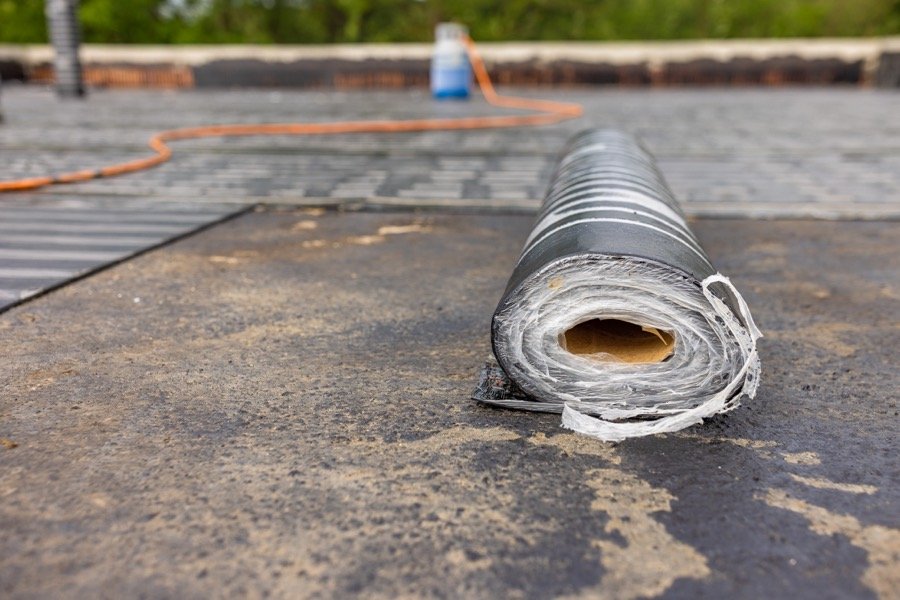
That is why vapor barriers—those thin sheets of polymer-based material sandwiched within the roof assembly—are not optional extras in modern commercial roofing systems. They are front-line defenders that keep roofs dry from the inside out. Below, we explore four key reasons every building manager and specifier should insist on a properly installed vapor barrier.
Controlling Interior Moisture Migration
At the most basic level, a vapor barrier stops warm, humid air generated by people, machinery, or HVAC systems from migrating upward and condensing inside the roof. Without that membrane, vapor moves through even the smallest gaps in insulation and cools when it meets the underside of the deck. Over time, beads of water accumulate, drip onto ceilings, saturate insulation, and warp roof sheathing.
A continuous, well-sealed vapor barrier interrupts this process by providing a low-permeance layer that humid air cannot penetrate. It maintains the dew point within the insulation layer itself, preventing condensation hotspots that lead to costly callbacks and premature roof failure.
Preserving Insulation Performance and Energy Efficiency
When insulation becomes damp, its air pockets fill with water, and its ability to resist heat flow plummets. A single roof leak might wet a localized area, but unchecked vapor diffusion can compromise entire sections of insulation with no visible surface clues. A vapor barrier locks moisture out, so the insulation retains its designed R-value season after season.
The result is a roof that performs to spec, stabilizing indoor temperatures and cutting heating and cooling costs. For large commercial properties where utility bills run high, the energy savings alone can justify the modest upfront cost of the barrier.
Protecting Structural Components and Indoor Air Quality
Metal roof decks are surprisingly vulnerable to sustained moisture exposure. Continuous condensation can rust fasteners, promote galvanic corrosion between dissimilar metals, and weaken the deck’s structural integrity. Wood substrates fare no better; they swell, split, and invite fungal growth.
By blocking vapor flow, a barrier keeps these components dry, extending their service life and reducing maintenance spend. Equally important, a dry roof cavity discourages mold and mildew, preserving healthy indoor air for occupants. Tenants notice fewer odors, fewer allergy triggers, and overall better comfort—an often overlooked but critical benefit in office and healthcare settings.
Delivering Long-Term ROI Through Reduced Repairs
Beyond immediate protection, vapor barriers translate into significant long-term savings. Roof leaks caused by trapped condensation typically appear years after installation, making warranty claims difficult and repairs expensive. A barrier essentially functions as an insurance policy, minimizing the risk of emergency tear-offs or disruptive retrofits.
Building owners who partner early with a knowledgeable commercial roofing company to specify the right barrier thickness and perm rating can expect fewer moisture-related service calls, a longer roof life cycle, and predictable budgeting for capital improvements.
Conclusion
A commercial roof is more than a waterproof skin; it is a multilayered system that must manage heat, humidity, and structural loads simultaneously. Vapor barriers play a pivotal role in that system by stopping moisture migration before it starts, keeping insulation effective, protecting substrates, and lowering operational costs over the roof’s lifespan.
In an era where energy efficiency, occupant health, and asset longevity all drive profitability, installing an appropriate vapor barrier is not just best practice—it is essential stewardship of the building itself.